
You eat plenty of vegetables, exercise regularly, and rarely order fried food-yet your cholesterol test still shows a high LDL result. It can feel unfair, especially when someone else follows a less healthy lifestyle and receives perfectly ordinary numbers.
The explanation may partly lie in your DNA.
Genetics can affect cholesterol levels by influencing how much cholesterol your liver produces, how efficiently it removes LDL particles from the bloodstream, and how different fats are transported around the body.
Some inherited changes have a small effect, while others can cause extremely high cholesterol from childhood. This does not mean lifestyle choices are pointless or that your future is already decided.
Diet, physical activity, smoking, sleep, medical conditions, and medication still influence cardiovascular risk. However, understanding your genetic background can explain why standard lifestyle changes work differently for different people.
It can also reveal when earlier screening, family testing, or cholesterol-lowering treatment may be necessary.
Your Genes Help Set Your Cholesterol Baseline
Cholesterol levels are shaped by both biology and daily habits. Your genes provide instructions for proteins that control how cholesterol is produced, packaged, transported, and removed from your blood.
For example, the liver uses LDL receptors to collect LDL particles from circulation. Some people naturally have receptors that work very efficiently, while others inherit genetic variations that make LDL removal slower.
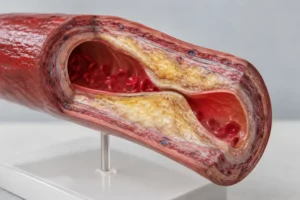
When LDL particles remain in the bloodstream for longer, the measured LDL cholesterol level may rise. Continued exposure to high LDL can increase the chance that cholesterol will enter artery walls and contribute to atherosclerotic plaque.
Genes can also influence HDL cholesterol, triglycerides, and other lipoproteins. This helps explain why relatives often have similar lipid profiles, even when their eating and exercise habits are not identical.
Most Genetic Influence Is Not Caused by One Gene
When people hear “genetic cholesterol,” they often imagine a single faulty gene. In reality, many cholesterol differences result from the combined effect of numerous common genetic variations.
Each variation may change LDL, HDL, or triglycerides by only a small amount. Together, however, they can create a noticeable tendency toward higher or lower levels. This is sometimes described as polygenic high cholesterol.
Imagine receiving dozens of tiny genetic pushes. One may slightly increase cholesterol production, another may slow LDL clearance, and another may affect triglyceride metabolism. None is dramatic alone, but their combined influence can become significant.
This polygenic pattern is different from a condition caused mainly by a major mutation, such as familial hypercholesterolemia. It may also be harder to recognize because cholesterol levels can range from moderately elevated to very high rather than following one obvious pattern.
Familial Hypercholesterolemia Can Cause Very High LDL
Familial hypercholesterolemia, commonly shortened to FH, is an inherited disorder that causes high LDL cholesterol from birth. It affects the body’s ability to remove excess LDL efficiently.
FH is estimated to affect roughly 1 in 200 to 1 in 311 people, depending on the population and data source. Without early identification and treatment, the lifelong exposure to high LDL can substantially increase the risk of premature coronary artery disease and heart attack.
An LDL result above 190 mg/dL in an adult is one clue that FH may be present, particularly when several relatives have high cholesterol or early heart disease. Children with FH can also have unusually high LDL levels.
Many people with the condition look and feel healthy. High cholesterol itself normally causes no symptoms, so FH may remain unnoticed until routine screening or a cardiovascular problem reveals it.
Which Genes Are Associated With FH?
The most common genetic cause involves the LDLR gene, which provides instructions for producing LDL receptors. Certain mutations reduce the number of working receptors or prevent them from clearing LDL effectively.
Changes in the APOB and PCSK9 genes can also cause FH. A rarer form is associated with the LDLRAP1 gene. All these genes play roles in the system that recognizes and removes LDL particles from the blood.
Most FH caused by LDLR, APOB, or PCSK9 mutations follows an autosomal dominant inheritance pattern. This means inheriting one altered copy from either parent can be enough to cause the condition.
When a parent has this type of FH, each biological child generally has a 50% chance of inheriting the responsible genetic change.
Heterozygous and Homozygous FH Are Different
Most people diagnosed with FH have heterozygous familial hypercholesterolemia, or HeFH. They usually inherit one altered gene copy from one parent.
A much rarer and more severe form is called homozygous familial hypercholesterolemia, or HoFH. A person with HoFH generally inherits a relevant genetic change from both parents.
People with HoFH may have extremely high LDL beginning in childhood and can develop serious artery disease at a very young age. Specialist treatment is normally required because healthy eating and standard medication may not lower LDL sufficiently.
These categories show why the phrase “high cholesterol runs in my family” can describe very different levels of risk. A detailed family history and professional assessment are more useful than assuming every inherited pattern is the same.
Family History Can Reveal Important Clues
You do not need a genetic test to start investigating inherited cholesterol risk. Your family’s health history can provide valuable information.
Warning signs may include several close relatives with high LDL, a parent diagnosed with FH, or heart attacks and other cardiovascular events occurring unusually early.
A pattern of heart disease before age 55 in men or 65 in women is often considered particularly important in cardiovascular risk assessment.
Physical signs can occasionally appear in people with severe inherited cholesterol. These include cholesterol deposits around the tendons, yellowish areas near the eyes, or a pale ring around the cornea. However, many people with FH have none of these visible signs.
Collecting basic information about your parents, siblings, grandparents, and children can therefore be useful. Record known cholesterol problems, heart attacks, strokes, treatment history, and the ages at which events occurred.
Genetics Does Not Make Lifestyle Irrelevant
Having inherited high cholesterol does not mean healthy habits are useless. Lifestyle choices may not remove the genetic cause, but they can reduce additional strain on the cardiovascular system.
A diet high in saturated fat can raise LDL further, while smoking damages artery walls and increases heart risk independently of cholesterol. Physical inactivity, diabetes, high blood pressure, obesity, and inadequate sleep may add to an already elevated inherited risk.
A heart-supportive routine can include vegetables, fruit, whole grains, beans, nuts, fish, unsaturated oils, and regular physical activity. Avoiding tobacco and managing blood pressure or blood sugar are equally important.
Still, lifestyle changes alone are often not enough for people with FH. Cholesterol-lowering medication may be required because the body has a biological difficulty clearing LDL, not because the person has failed to eat well or exercise.
Lipoprotein(a) Is Another Inherited Risk Factor
Genetics can also influence lipoprotein(a), usually written as Lp(a). It is a cholesterol-carrying particle that resembles LDL but contains an additional protein.
Lp(a) levels are largely inherited and tend to remain relatively stable throughout life. Elevated levels can increase the risk of atherosclerotic cardiovascular disease and stroke, even when a standard LDL result does not look unusually high.
A standard lipid panel does not normally include Lp(a), so it requires a separate blood test. Current US guidance recommends measuring it at least once during adulthood to improve cardiovascular risk assessment.
Diet and exercise have limited effects on the Lp(a) level itself. However, controlling LDL, blood pressure, diabetes, smoking, and other modifiable risks can still help protect the heart.
How Inherited Cholesterol Problems Are Diagnosed
A healthcare professional will normally begin with a lipid panel, personal medical history, and family health history. The test measures total cholesterol, LDL, HDL, and triglycerides.
If LDL is extremely high or the family history is concerning, the clinician may investigate secondary causes such as hypothyroidism, kidney disease, certain medicines, or uncontrolled diabetes. These conditions can raise cholesterol without being inherited cholesterol disorders.
Genetic testing may then be considered when FH is strongly suspected. A positive test can confirm a disease-causing genetic change and make it easier to identify relatives who may have inherited the same variant.
However, a negative genetic test does not always exclude FH. The CDC notes that an identifiable mutation is found in only about 60% to 80% of people with the condition. Diagnosis can still be based on LDL levels, family history, and clinical findings.
Why Family Screening Matters
When one person is diagnosed with FH, close biological relatives may also need cholesterol or genetic testing. This family-based approach is often called cascade screening.
Testing normally begins with parents, siblings, and children because they have the highest likelihood of sharing the relevant gene. It can then extend to other relatives when necessary.
Finding the condition early allows treatment to begin before years of LDL exposure produce serious artery damage. Children at increased risk may be screened from age two, while general childhood cholesterol screening is commonly recommended between ages 9 and 11.
Treatment may include heart-healthy habits, statins, additional LDL-lowering medicines, or specialist therapies for severe cases. The goal is to reduce lifelong cholesterol exposure rather than waiting for symptoms to develop.
Genetics can affect cholesterol levels by changing how the body produces, transports, and removes fats from the bloodstream.
Many people inherit a mixture of small genetic influences, while others have a specific condition such as familial hypercholesterolemia that causes very high LDL from birth.
Your genes influence risk, but they do not make preventive action pointless. Healthy habits, regular testing, appropriate medication, and management of other cardiovascular risks can still make an important difference.
Review your family history and ask when you last had a lipid panel. Speak with a healthcare professional if close relatives have very high cholesterol or early heart disease.
Identifying an inherited problem early may protect not only your health but also the health of your children, siblings, and other relatives.