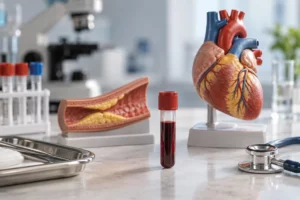

Your arteries may look like simple tubes, but they are living, flexible blood vessels that constantly adjust to deliver oxygen and nutrients throughout your body.
When they are healthy, blood can flow smoothly from your heart to your brain, muscles, kidneys, and other organs.
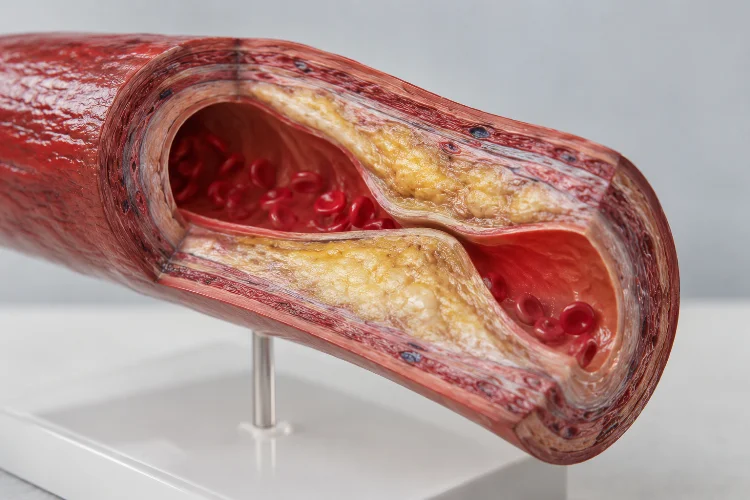
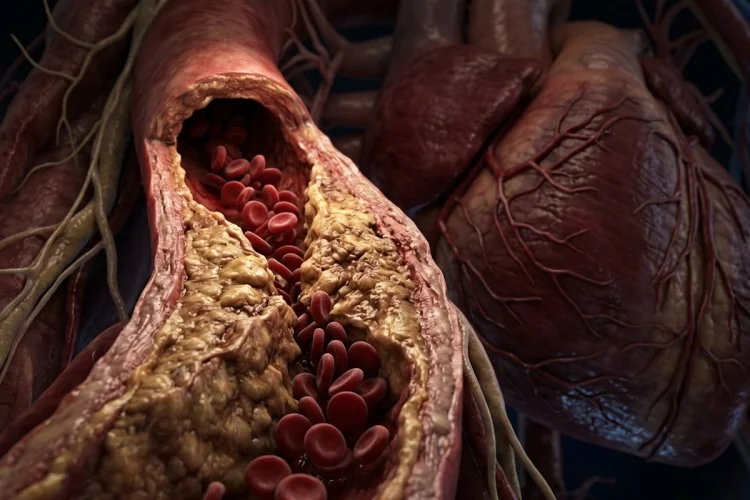
Problems can develop when cholesterol and other substances begin accumulating inside the artery wall. Over time, these deposits can grow into atherosclerotic plaque, making the passageway for blood progressively narrower.
Understanding how cholesterol plaque can narrow the arteries helps explain why high cholesterol matters even when you feel perfectly healthy.
Plaque buildup is usually slow, often developing over many years without noticeable symptoms. Yet as arteries become narrower, organs may receive less oxygen-rich blood, while unstable plaques can rupture and trigger dangerous blood clots.
The process is known as atherosclerosis, and it is a major contributor to heart attacks, strokes, peripheral artery disease, and other cardiovascular conditions.
What Is Cholesterol Plaque?
Cholesterol plaque is not simply a chunk of cholesterol stuck inside a blood vessel.
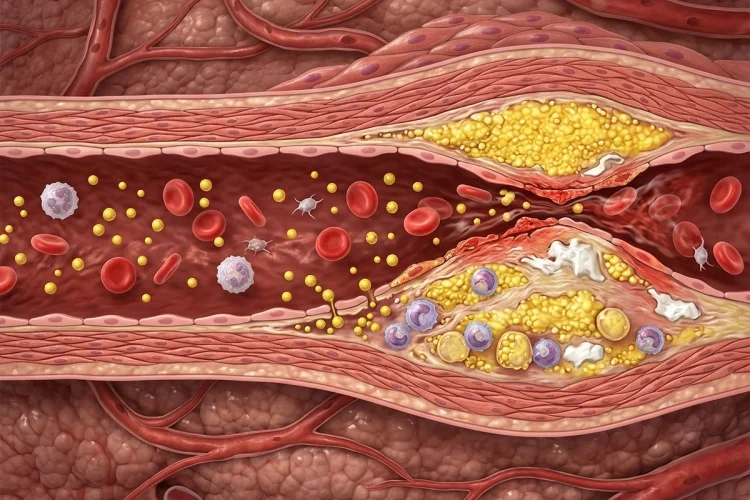
Atherosclerotic plaque is a complex mixture that can contain cholesterol, fats, inflammatory cells, blood cells, calcium, and other substances. These materials accumulate within the walls of arteries rather than simply floating freely through the bloodstream.
As plaque develops, the artery wall can become thicker and less flexible.
This distinction matters because atherosclerosis is not the same as having a temporary blockage inside a pipe. The disease actually changes the structure of the blood vessel itself.
Some plaques remain relatively stable for years. Others may continue growing or become vulnerable to rupture.
The amount of visible narrowing is therefore important, but it is not the only feature that determines how dangerous a particular plaque may become.
How Does Cholesterol Get Into the Artery Wall?
The process often begins when the inner lining of an artery becomes damaged or dysfunctional.
This inner lining, called the endothelium, normally provides a smooth interface between circulating blood and the arterial wall. Factors such as high blood pressure, smoking, high cholesterol, diabetes, and inflammation can contribute to arterial damage over time.
Once vulnerable areas develop, cholesterol-containing particles can accumulate within the artery wall.
LDL, or low-density lipoprotein, is particularly important. The CDC notes that high levels of LDL cholesterol are associated with increased heart disease and stroke risk, and excessive LDL can contribute to plaque buildup in blood vessel walls.
The immune system then becomes involved.
Inflammatory cells travel into the damaged area and release chemical signals. White blood cells take up cholesterol, contributing to an increasingly complex deposit inside the artery wall.
What begins as microscopic changes can gradually turn into a substantial plaque.
How Growing Plaque Makes an Artery Narrower
Imagine a flexible drinking straw with a wall that becomes progressively thicker from the inside.
The outside diameter might initially look similar, but the space available for liquid becomes smaller. Something comparable can happen when atherosclerotic plaque grows within an artery.
As plaque becomes larger, it can protrude farther into the lumen, which is the open space through which blood travels. The narrowing limits how easily oxygen-rich blood can move through the vessel.
The change typically happens gradually.
Early in the disease, the artery may compensate for some plaque growth, so blood flow remains adequate. This partly explains why someone can have developing atherosclerosis without experiencing obvious symptoms.
Eventually, however, continued plaque developement may significantly reduce the available space.
When tissues require more oxygen-such as during exercise-a severely narrowed artery may no longer be able to increase blood flow enough to meet demand.
That is when symptoms can become more noticeable.
Why Narrow Arteries Reduce Oxygen Supply
Blood does much more than simply circulate around the body. It delivers oxygen that cells need to produce energy and function properly.
When atherosclerosis substantially reduces blood flow, tissues beyond the narrowing may receive insufficient oxygen.
The consequences depend heavily on which arteries are affected.
If plaque narrows the coronary arteries that supply the heart muscle, reduced blood flow can cause angina, often experienced as chest pressure or discomfort.
If arteries supplying the legs are affected, a person may develop peripheral artery disease. One classic symptom is leg discomfort or cramping during walking because exercising muscles require more oxygen than the narrowed arteries can deliver.
Plaque can also affect arteries supplying the brain, kidneys, and other parts of the body.
This is why atherosclerosis is better thought of as a systemic arterial disease rather than simply a heart condition.
Plaque Does More Than Simply Narrow an Artery
One of the most important things to understand about atherosclerosis is that gradual narrowing is only part of the danger.
A plaque can sometimes rupture.
When the surface breaks open, the body reacts as though the blood vessel has been injured. Platelets and clotting proteins can rapidly gather around the rupture, producing a blood clot.
That clot may suddenly reduce or completely stop blood flow.
If this occurs in a coronary artery, the heart muscle may be deprived of oxygen, potentially causing a heart attack. If blood flow to part of the brain is interrupted, the result may be an ischemic stroke.
This means an artery does not necessarily need to become slowly narrowed to 100% before a medical emergency occurs.
An unstable plaque can rupture and create a sudden obstruction through clot formation.
That is one reason cardiovascular prevention focuses not only on improving ciruclation but also on reducing the underlying disease process and controlling major risk factors.
Why High LDL Cholesterol Matters
Your body actually needs cholesterol. It helps build cell membranes and supports the production of hormones and other important substances.
The problem is excessive exposure to certain cholesterol-carrying particles, particularly LDL.
When LDL levels remain high over time, there are more opportunities for cholesterol-containing particles to interact with vulnerable arterial walls. This contributes to the development and progression of atherosclerotic plaque.
However, LDL does not operate in isolation.
High blood pressure can place additional stress on artery walls. Smoking damages the cardiovascular system, while diabetes can accelerate vascular damage. Physical inactivity, obesity, genetics, and certain inflammatory conditions can further influence risk.
Think of cardiovascular risk as several forces acting on the same arterial system.
Someone with moderately elevated LDL plus smoking, diabetes, and hypertension may have a very different risk profile from someone with the same cholesterol level but few additional risk factors.
That is why doctors evaluate more than a single cholesterol number.
Why Plaque Buildup Can Be Silent for Years
Atherosclerosis is sometimes called a silent disease because mild or moderate plaque buildup may produce no obvious symptoms.
Your arteries have some ability to adapt, and many organs do not show symptoms until blood supply becomes meaningfully restricted.
Mayo Clinic notes that symptoms often appear only after an artery has become narrowed or clogged enough that adequate blood cannot reach tissues and organs.
This creates an important misconception.
Feeling healthy does not guarantee that your arteries are completely free of plaque.
Someone might have elevated LDL cholesterol, high blood pressure, or early atherosclerosis for years while continuing normal daily activities.
Routine cardiovascular screening is therefore useful.
Blood pressure measurements, lipid panels, diabetes screening, and assessment of smoking and family history can reveal risk factors long before obvious cardiovascular symptoms appear.
In selected people, doctors may recommend additional tests to evaluate possible arterial disease.
Can Cholesterol Plaque Be Prevented or Slowed?
Although you cannot control every cardiovascular risk factor, many of the major contributors to plaque formation can be managed.
Lowering excessive LDL cholesterol is one important strategy. Depending on your overall risk, this may involve dietary changes, regular physical activity, weight management, avoiding tobacco, medication, or a combination of approaches.
The American Heart Association notes that healthier lifestyle habits and, when needed, cholesterol-lowering medications can help manage high cholesterol and support artery health.
Managing blood pressure and diabetes is also important because both conditions can affect the artery walls.
Diet does not need to be complicated. Patterns emphasizing vegetables, fruits, whole grains, legumes, nuts, seeds, and other minimally processed foods can support cardiovascular health, while limiting excessive saturated and trans fats can help with cholesterol management.
Regular exercise supports heart function, blood pressure control, metabolic health, and body weight.
And remeber: prevention is usually about consistency rather than perfection.
Small changes maintained for years can have much more value than an extreme routine that disappears after two weeks.
When Narrowed Arteries Become an Emergency
Gradual atherosclerosis deserves medical attention, but certain symptoms require immediate care.
New chest pressure, severe chest discomfort, sudden shortness of breath, facial drooping, difficulty speaking, sudden weakness or numbness, or sudden vision problems can signal a heart attack, stroke, or another vascular emergency.
Do not assume these symptoms will simply disappear.
Plaque rupture and blood clot formation can change blood flow very quickly, even though the underlying inflamation and plaque buildup developed over many years.
Prompt treatment can protect heart or brain tissue by restoring blood flow as quickly as possible.
For people without emergency symptoms, regular healthcare visits remain valuable for identifying and controlling risk factors before serious complications occur.
Understanding how cholesterol plaque can narrow the arteries makes it easier to see why cholesterol management is about much more than improving a number on a blood test.
LDL-containing particles, inflammation, immune cells, calcium, and other materials can gradually create plaque within artery walls, reducing the space available for oxygen-rich blood to flow.
The disease often progresses quietly, but advanced narrowing can cause angina, peripheral artery disease, and other circulation problems. Plaque rupture can be even more dangerous because it may trigger a sudden blood clot, heart attack, or stroke.
The practical next step is simple: know your cholesterol, blood pressure, blood sugar, and personal cardiovascular risk. If any of these are elevated, talk with your healthcare professional about realistic ways to protect your arteries over the long term.