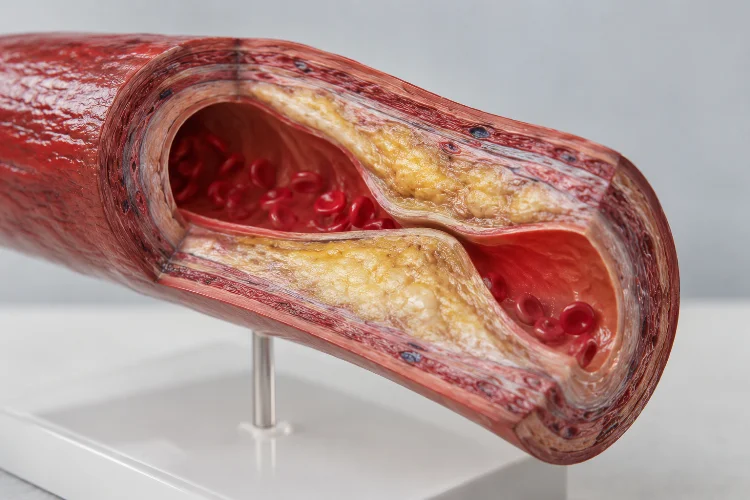
Imagine your arteries as flexible highways carrying oxygen-rich blood from your heart to almost every part of your body.
When those highways are healthy, blood moves freely. But over many years, deposits can gradually build up inside the artery walls, making the passage narrower and less flexible.
This process is called atherosclerosis.
Understanding what is atherosclerosis and how does it develop is important because the condition is closely connected with coronary artery disease, heart attacks, strokes, and peripheral artery disease.
The tricky part is that atherosclerosis usually develops slowly and can begin long before any obvious symptoms appear.
It is also more complicated than simply having “fat in the arteries.” Cholesterol, inflammatory cells, calcium, cellular waste, and several biological processes all play a role in building atherosclerotic plaque.
The good news is that many of the factors driving this process can be identified and managed before serious complications develop.
What Exactly Is Atherosclerosis?
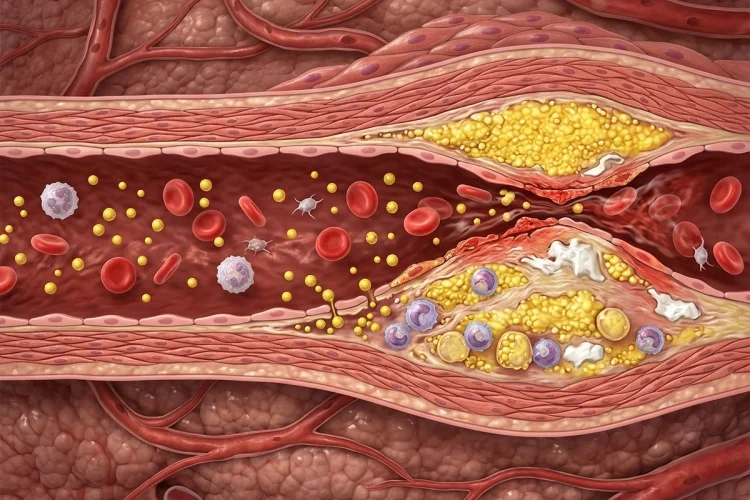
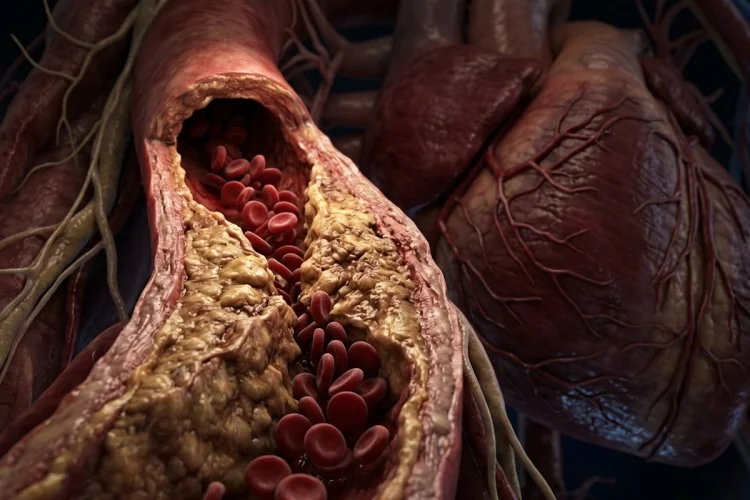
Atherosclerosis is a condition in which plaque builds up within the walls of arteries. Plaque contains cholesterol, fat, blood cells, calcium, and other substances found in the bloodstream.
As plaque becomes larger and harder, the affected artery may become narrower. That makes it more difficult for oxygen-rich blood to reach tissues and organs.
Atherosclerosis is sometimes confused with arteriosclerosis, but they are not exactly the same thing.
Arteriosclerosis is a broader term describing arteries that become thickened, stiff, and less flexible. Atherosclerosis is one specific type of arteriosclerosis caused by plaque accumulation.
Although people often associate atherosclerosis with the heart, it can affect arteries throughout the body, including those supplying the brain, kidneys, arms, and legs.
How Does Atherosclerosis Begin?
Atherosclerosis does not normally appear overnight. It develops through a long biological process that may begin surprisingly early in life.
One important starting point involves changes or damage to the endothelium, the delicate inner lining of an artery.
Factors such as high blood pressure, smoking, diabetes, unhealthy cholesterol levels, and chronic inflammation can place stress on this lining. Once the artery wall becomes dysfunctional or damaged, cholesterol and inflammatory cells can begin accumulating in the affected area.
You can think of the endothelium as the protective inner surface of a pipe. When that surface is healthy, it helps regulate blood flow and keeps the artery functioning normally.
When repeated stress damages that protective layer, conditions become more favorable for plaque developement.
The process can continue silently for years or even decades before blood flow becomes seriously restricted.
What Role Does LDL Cholesterol Play?
LDL, or low-density lipoprotein, plays an important role in the development of atherosclerosis.
LDL carries cholesterol through the bloodstream. When there are excessive amounts of LDL-containing particles circulating in the blood, some can enter vulnerable areas of the artery wall.
Cholesterol then begins accumulating within the arterial tissue.
Your immune system recognizes these changes and sends inflammatory cells to the area. Certain white blood cells take up cholesterol and eventually become cholesterol-filled cells that contribute to early plaque formation.
NHLBI describes this combination of cholesterol, inflammatory cells, and cellular material as part of the process that produces plaque.
This helps explain why high LDL cholesterol is considered an important cardiovascular risk factor.
However, LDL is not acting alone. Blood pressure, smoking, blood sugar, genetics, inflammation, and other factors can accelerate the same process.
From Fatty Deposits to Atherosclerotic Plaque
The earliest changes may be relatively small, but plaque can become increasingly complex over time.
Inflammatory cells continue gathering around accumulated cholesterol. Other material, including calcium and cellular debris, can become part of the growing lesion. The artery responds by changing its structure around the plaque.
Eventually, a fibrous layer may form over the deposit.
Some plaques remain relatively stable for long periods. Others become more vulnerable because of ongoing inflamation and changes within the plaque.
As the deposit grows, it may begin reducing the space available for blood to travel through the artery.
For example, plaque developing in coronary arteries can eventually reduce blood flow to the heart muscle. During exercise, when the heart requires more oxygen, the narrowed artery may struggle to meet that demand.
This can contribute to symptoms such as chest pressure or angina.
Why Plaque Rupture Can Be More Dangerous Than Narrowing
It is easy to imagine the biggest danger as an artery slowly becoming completely clogged. That can happen, but atherosclerosis has another important complication: plaque rupture.
Some plaques can become unstable and break open.
When the surface of a plaque ruptures, the body treats the area much like an injury and activates its clotting system. A blood clot may rapidly form at the damaged site.
If that clot suddenly blocks a coronary artery, part of the heart muscle may lose its oxygen supply. The result can be a heart attack.
If an artery supplying the brain becomes blocked, a stroke can occur.
This explains why a serious cardiovascular event can sometimes appear suddenly even though the underlying atherosclerosis has been developing quietly for many years.
The dangerous event may happen quickly. The disease behind it usually did not.
Where Can Atherosclerosis Develop?
Atherosclerosis can occur in many different arterial systems, so its effects depend heavily on where plaque develops.
When coronary arteries supplying the heart are affected, atherosclerosis can contribute to coronary artery disease, angina, and heart attacks.
Plaque in arteries supplying the brain can increase the risk of a transient ischemic attack or stroke. Meanwhile, atherosclerosis in arteries supplying the legs may cause peripheral artery disease (PAD).
Someone with PAD may experience leg discomfort or cramping when walking because the muscles are not receiving enough oxygen-rich blood during activity.
Atherosclerosis can also affect arteries supplying the kidneys and other organs.
So, while the disease is frequently discussed as a heart problem, it is better understood as a disease of the arterial system.
Why You May Not Notice Atherosclerosis Developing
One reason atherosclerosis is dangerous is that mild disease often causes no symptoms.
The body can sometimes compensate for gradually narrowing arteries, and a person may feel perfectly healthy for years. Symptoms often appear only when blood flow becomes significantly reduced or a plaque suddenly causes a clot.
For this reason, cardiovascular risk assessment matters even when you feel well.
Blood pressure checks, cholesterol testing, diabetes screening, smoking history, family history, and other information can help identify people who may have an increased risk before complications occur.
An adult who exercises regularly and feels healthy can still have high LDL cholesterol or hypertension without knowing it.
Feeling good is valuable, but it does not automatically tell you what is happening inside your arteries.
What Increases the Risk of Atherosclerosis?
Several risk factors make atherosclerotic plaque more likely to develop or progress.
High LDL cholesterol, high blood pressure, diabetes, smoking, limited physical activity, obesity, and an unhealthy dietary pattern are among the important modifiable factors. Chronic inflammatory diseases may also increase cardiovascular risk.
Genetics also matter.
For example, people with familial hypercholesterolemia can have very high LDL cholesterol from a young age because of inherited changes affecting cholesterol metabolism. NHLBI estimates that familial hypercholesterolemia affects about 1 in 300 people.
Age matters as well because plaque accumulation can develop over many years.
That does not mean atherosclerosis is simply an unavoidable consequence of getting older. Rather, longer exposure to risk factors gives the disease more time to progress.
Can Atherosclerosis Be Prevented or Slowed?
Many strategies used to prevent heart disease work partly because they reduce the conditions that encourage atherosclerosis.
Managing LDL cholesterol is especially important. Depending on a person’s cardiovascular risk, this may involve dietary changes, regular physical activity, weight management, smoking cessation, and cholesterol-lowering medication when appropriate.
Keeping blood pressure and diabetes under control also reduces stress on the arteries.
A heart-supportive eating pattern typically emphasizes vegetables, fruits, whole grains, legumes, nuts, seeds, and other minimally processed foods while limiting excessive saturated fat and highly processed foods.
Regular movement matters too. Even simple activities such as brisk walking can contribute to better cardiovascular fitness and metabolic health.
Most importantly, prevention is not about achieving perfect habits.
It is about reducing long-term exposure to the factors that gradually damage arteries. Small improvements maintained for years can matter far more than an extreme health routine followed for only a few weeks.
When Should You Talk to a Healthcare Professional?
Because atherosclerosis often develops without obvious symptoms, routine preventive healthcare is useful even when you feel healthy.
Ask your healthcare professional about your blood pressure, cholesterol levels, blood sugar, family history, and overall cardiovascular risk. Depending on your situation, additional testing may sometimes be appropriate.
Seek urgent medical attention for possible symptoms of a heart attack or stroke, such as new chest pain or pressure, sudden weakness or numbness, facial drooping, difficulty speaking, or sudden changes in vision.
These symptoms should not be ignored while you wait to see whether they disappear.
Early treatment can make a major difference in the outcome of an acute cardiovascular event.
Understanding what is atherosclerosis and how does it develop reveals that cardiovascular disease is usually the result of a long process rather than a sudden occurence.
Changes in the artery lining allow cholesterol and inflammatory cells to accumulate, plaque gradually forms, and arteries may eventually narrow or develop unstable plaques capable of triggering dangerous blood clots.
High LDL cholesterol, hypertension, diabetes, smoking, genetics, and other factors can influence how quickly this process progresses. The practical takeaway is simple: do not wait for symptoms before thinking about artery health.
Check your cholesterol, blood pressure, blood sugar, and cardiovascular risk regularly, and discuss abnormal results with a healthcare professional. Protecting your arteries today can help reduce the likelihood of serious cardiovascular problems later.