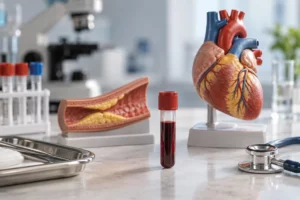

A high cholesterol result does not mean you are having a heart attack-or that one is guaranteed to happen. Still, cholesterol levels can tell us something important about what may be happening inside the arteries over time.
The connection between cholesterol and heart attacks mainly involves LDL cholesterol, atherosclerosis, and the coronary arteries that supply oxygen-rich blood to the heart muscle.
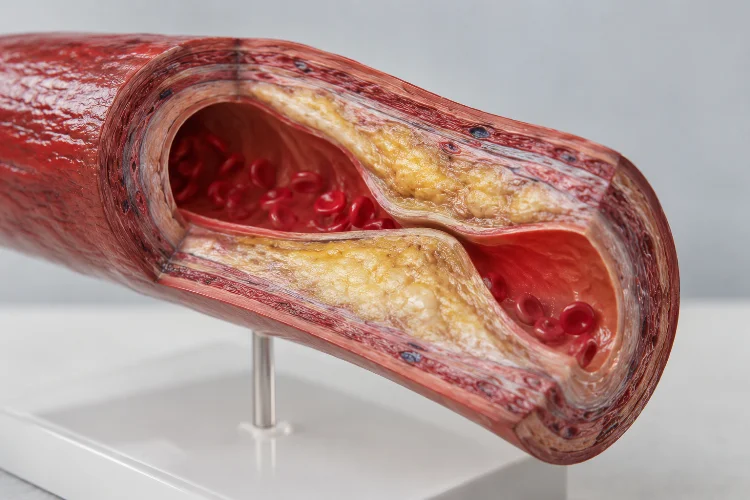
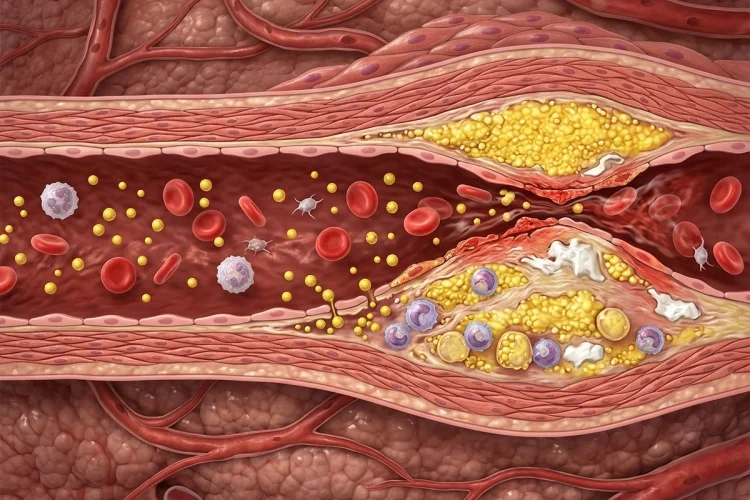
When too much LDL circulates in the bloodstream for many years, cholesterol-containing particles can become trapped in artery walls. Inflammation and other biological processes then help turn those deposits into plaque.
Some plaques gradually narrow an artery. Others may suddenly rupture, triggering a blood clot that blocks blood flow to part of the heart. That interruption is one of the most common ways a heart attack occurs.
Understanding this process makes cholesterol numbers much more meaningful-and shows why prevention often starts years before symptoms appear.
Why Does the Body Need Cholesterol?
Cholesterol often gets treated like something your body would be better off without, but that is not accurate.
It is a waxy substance used to build cell membranes and produce important compounds in the body. The problem is not simply having cholesterol.
The bigger concern is having too many cholesterol-carrying particles associated with atherosclerosis circulating in the blood over long periods.
Because cholesterol cannot travel freely through your bloodstream, it moves inside particles called lipoproteins.
Two familiar types are LDL, or low-density lipoprotein, and HDL, or high-density lipoprotein. LDL is commonly called “bad cholesterol” because elevated LDL levels contribute to fatty buildup inside arteries.
HDL is often described as “good cholesterol,” although modern cardiovascular assessment does not simply treat high HDL as protection against high LDL.
The overall pattern of your blood lipids and cardiovascular risk matters more.
How LDL Cholesterol Contributes to Artery Plaque
The link between cholesterol and heart disease develops gradually.
When LDL-containing particles circulate in excessive amounts, some can enter vulnerable areas of the artery wall. The immune system responds to these particles, creating an inflamatory reaction that contributes to plaque formation.
Over time, cholesterol combines with inflammatory cells and other substances to create atherosclerotic plaque.
The plaque develops within the artery wall, rather than behaving like grease simply sticking to the inside of a household pipe.
As plaque grows, the wall may become thicker and the available space for blood to flow can become smaller. The artery may also lose some of its normal flexibility.
This process is known as atherosclerosis. According to the American Heart Association, elevated cholesterol can contribute to deposits that progressively narrow arteries and increase cardiovascular risk.
The process usually takes years or decades, which is one reason high cholesterol often causes no immediate symptoms.
What Happens When Plaque Reaches the Coronary Arteries?
Your heart is a muscle, and like every other muscle, it needs a continuous supply of oxygen.
Blood reaches heart tissue through vessels known as the coronary arteries.
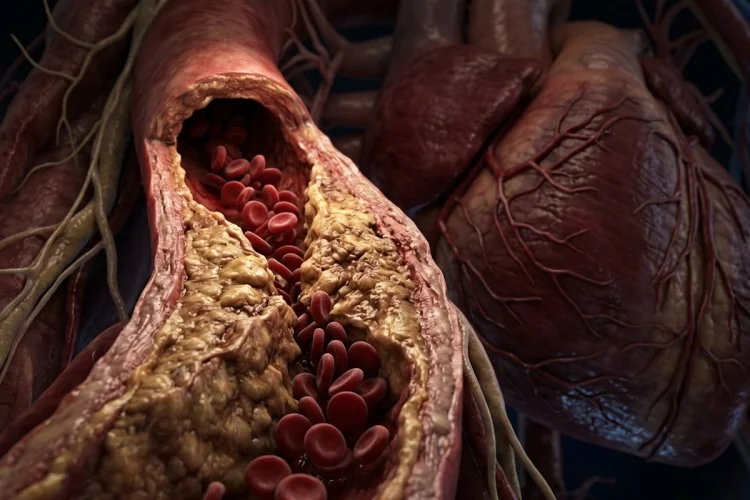
When cholesterol-rich plaque builds up in these arteries, the passageway can become progressively narrower. If blood flow becomes insufficient-especially when the heart needs more oxygen during physical activity-a person may develop chest discomfort known as angina.
This condition falls under the broader category of coronary artery disease.
You can think of it as a supply-and-demand problem. During rest, a narrowed coronary artery might still deliver enough blood.
But imagine climbing several flights of stairs. Your heart begins working harder and needs more oxygen.
If a narrowed artery cannot increase blood delivery enough, the heart muscle may become temporarily oxygen-starved.
Importantly, narrowing is not the only danger. A plaque that does not appear to completely obstruct an artery can still become dangerous if it suddenly ruptures.
How Plaque Rupture Can Trigger a Heart Attack
This is where the cholesterol-heart attack connection becomes especially important.
Some atherosclerotic plaques develop a surface that can become unstable. If the plaque breaks open, your body interprets that rupture much like an injury.
The clotting system responds.
Platelets and other clotting components gather at the site, forming a blood clot. If the clot becomes large enough, it may partially or completely block the coronary artery.
Suddenly, part of the heart muscle stops receiving enough oxygen.
Without restored blood flow, heart cells can begin to become damaged and die. This is a myocardial infarction, commonly called a heart attack.
The American Heart Association explains that coronary plaque can rupture and lead to clot formation that blocks blood flow to the heart muscle.
That is why a heart attack can feel sudden even though the underlying artery disease has often been developing quietly for years.
Does High Cholesterol Mean You Will Have a Heart Attack?
No. High cholesterol increases risk, but it does not make a future heart attack inevitable.
Cardiovascular disease is influenced by many factors working together.
For example, two people could have identical LDL cholesterol levels but significantly different risks because of differences in age, blood pressure, smoking, diabetes, kidney disease, family history, or previous cardiovascular disease.
Someone who has high LDL along with uncontrolled hypertension and smoking will generally have a different risk profile from someone with the same LDL level but fewer additional risk factors.
Genetics also matter.
Some people inherit conditions such as familial hypercholesterolemia that cause very high LDL levels from an early age.
Because their arteries are exposed to excessive LDL for longer periods, their lifetime cardiovascular risk can become substantially higher without treatment.
The 2026 ACC/AHA dyslipidemia guideline emphasizes reducing long-term exposure to plaque-causing lipoproteins and tailoring cholesterol treatment to a person’s overall cardiovascular risk.
So cholesterol should be viewed as an important piece of the puzzle-not the entire puzzle.
Why High Cholesterol Can Be Easy to Miss
One frustrating feature of high cholestrol is that you generally cannot feel it.
A person can have elevated LDL for years while exercising, working, and going through daily life without obvious warning signs.
Atherosclerosis itself may also remain silent during its early stages.
Your arteries can sometimes compensate for gradually developing plaque, allowing adequate blood flow despite some narrowing. That means the first obvious sign of coronary artery disease may sometimes be significant chest pain-or, in serious cases, a cardiovascular event.
This is why blood testing matters.
A lipid panel can measure LDL cholesterol, HDL cholesterol, triglycerides, and total cholesterol before high levels lead to obvious problems.
According to the 2026 ACC/AHA cholesterol guideline announcement, approximately one in four U.S. adults has high LDL cholesterol, highlighting how common this risk factor is.
Knowing your numbers gives you an opportunity to respond before symptoms appear.
Can Lowering LDL Reduce Heart Attack Risk?
Managing LDL is a major part of cardiovascular prevention because LDL is directly involved in the developement of atherosclerotic disease.
For some people, lifestyle adjustments may produce meaningful improvements. Eating patterns rich in vegetables, fruits, whole grains, legumes, nuts, and other minimally processed foods can support cardiovascular health.
Reducing excessive saturated fat, avoiding tobacco, staying physically active, managing blood pressure, and controlling diabetes are also important.
However, lifestyle changes are not always enough.
People with significantly elevated LDL or higher cardiovascular risk may be advised to use cholesterol-lowering medication. Statins are widely used, and additional medications may be considered when further LDL reduction is needed.
The appropriate LDL target is not identical for everyone.
Current cardiovascular guidance uses overall risk to determine how aggressively cholesterol should be managed rather than relying on one universal number.
The goal is not simply to make a laboratory report look better. It is to reduce exposure to the particles that help drive plaque formation and lower the chance of future cardiovascular events.
What Other Factors Should You Watch?
LDL deserves attention, but protecting your heart involves more than tracking one number.
High blood pressure can damage arteries and make plaque formation easier. Diabetes can accelerate cardiovascular disease, while smoking directly harms blood vessels.
Family history can also reveal inherited risk that might not be obvious from your lifestyle.
Healthcare professionals therefore often estimate someone’s broader cardiovascular risk using cholesterol values alongside age, blood pressure, smoking status, diabetes, and other information.
Some people may benefit from additional evaluation, such as lipoprotein(a), ApoB testing, or coronary artery calcium scoring. The updated 2026 dyslipidemia guideline includes these tools for selected patients when they can improve cardiovascular risk assessment.
There is no need to order every heart test yourself.
The better approach is to discuss your results with a healthcare professional who can determine which information is actually useful for your situation.
Know the Warning Signs of a Heart Attack
Managing cholesterol is about long-term prevention, but everyone should also recognize signs of a possible cardiovascular emergency.
Heart attack symptoms can include chest pressure, squeezing or discomfort, pain spreading into the shoulder or arm, shortness of breath, sweating, nausea, unusual fatigue, or dizziness. Symptoms can vary from person to person.
A suspected heart attack requires immediate medical attention.
Do not wait for symptoms to become severe before seeking emergency help.
The best strategy, however, is prevention long before an emergency develops.
Regular cholesterol checks, blood pressure monitoring, avoiding tobacco, physical activity, and following your doctor’s treatment recomendation can all become part of a long-term heart-health plan.
The connection between cholesterol and heart attacks is mainly a story of long-term artery damage. Excess LDL-containing particles can contribute to atherosclerotic plaque, gradually narrowing coronary arteries and reducing blood flow.
If an unstable plaque ruptures, a clot may form quickly and block the oxygen supply to part of the heart, causing a heart attack. High cholesterol does not guarantee that this will happen, but it is an important modifiable cardiovascular risk factor.
Do not wait until heart disease produces symptoms to start paying attention. Know your LDL, HDL, triglycerides, blood pressure, and other major risk factors.
If your cholesterol is elevated, talk with a healthcare professional about your personal heart risk and whether lifestyle changes, medication, or additional evaluation could help protect your arteries.