High cholesterol is easy to ignore because it rarely changes how you feel today. It does not usually cause sudden pain, tiredness, or another obvious warning sign.
Behind the scenes, however, too much cholesterol in the bloodstream can slowly damage the arteries that carry oxygen-rich blood around the body.
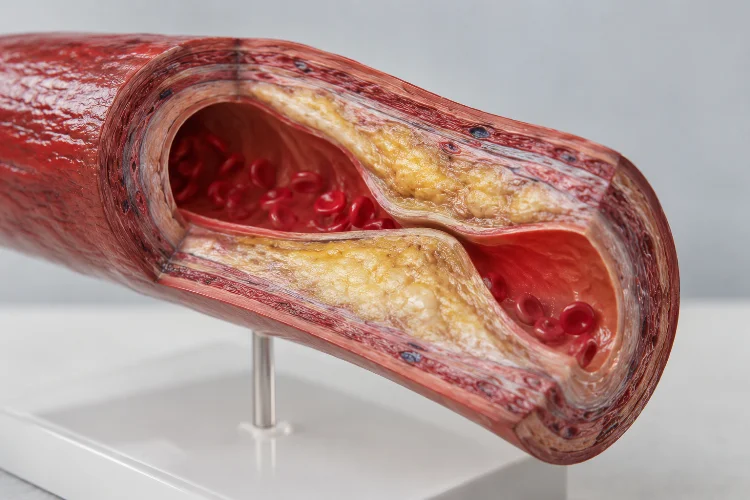
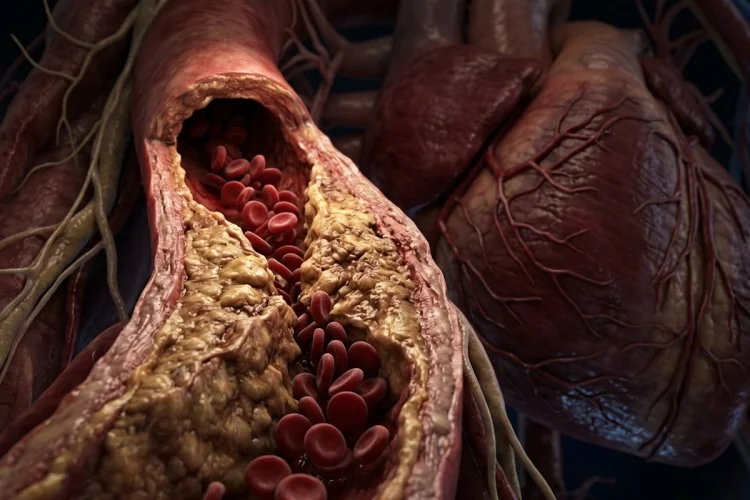
The process may take years or even decades. Cholesterol and other substances can collect inside artery walls, forming deposits called plaque.
As these deposits grow, the arteries may become narrower and less flexible, making it more difficult for blood to reach the heart, brain, legs, and other organs.
Understanding how high cholesterol affects the heart and blood vessels makes the condition feel less abstract. It also explains why cholesterol testing, healthier habits, and prescribed treatment matter-even when you feel perfectly healthy.
Cholesterol Is Necessary, but Balance Matters
Cholesterol is not automatically harmful. It is a waxy, fat-like substance that the body uses to build cells and produce hormones, vitamin D, and substances involved in digestion. The body naturally makes the cholesterol it requires.
Because cholesterol cannot dissolve in blood, it travels through the bloodstream inside particles called lipoproteins. Two familiar types are low-density lipoprotein, or LDL, and high-density lipoprotein, or HDL.
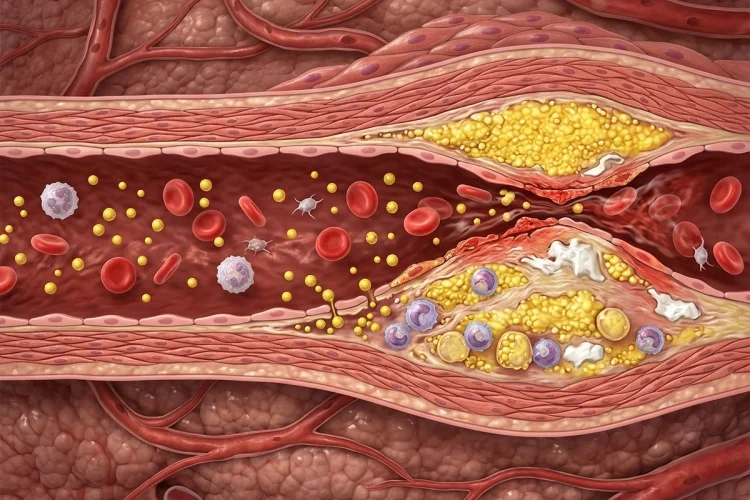
LDL carries cholesterol from the liver to different tissues. When too much LDL remains in circulation, cholesterol is more likely to collect in artery walls.
HDL helps transport excess cholesterol back toward the liver, although a high HDL result does not completely cancel the risks associated with high LDL.
The problem, therefore, is not that cholesterol exists. The concern is having an unhealthy amount or distribution of cholesterol-carrying particles over time.
How Cholesterol Plaque Develops Inside Arteries
Arteries are flexible blood vessels that transport oxygen-rich blood away from the heart. Their inner surfaces are designed to remain smooth so blood can flow efficiently.
When LDL cholesterol and other materials enter the artery wall, the body may respond as if an injury has occurred. Immune cells become involved, and deposits containing cholesterol, fat, calcium, blood cells, and other substances can gradually form.
This buildup is called plaque. The disease process caused by plaque accumulation is known as atherosclerosis.
You can imagine a healthy artery as a wide, flexible pipe. Plaque acts like material collecting along the inside of that pipe. The opening becomes smaller, while the wall becomes thicker and less flexible.
Plaque does not always grow evenly. Some deposits may remain relatively stable, while others can become inflamed or vulnerable to rupture.
Narrowed Arteries Reduce Blood Flow
As plaque grows, it reduces the space available for blood to travel through an artery. This may limit the delivery of oxygen and nutrients to tissues and organs.
The effects depend partly on which arteries are affected. Plaque in the coronary arteries can reduce blood flow to the heart muscle, while plaque in arteries leading to the brain can interfere with its blood supply.
Narrowing may initially cause no noticeable problem because the body can sometimes adapt to moderate changes. Symptoms often appear when blood flow becomes significantly restricted or when the body needs more oxygen during physical activity.
For example, a person may feel comfortable while sitting but develop pressure or discomfort in the chest while walking uphill. The heart is working harder, yet narrowed coronary arteries may be unable to deliver enough oxygen-rich blood to meet the increased demand.
Atherosclerosis can eventually reduce or completely block blood flow to organs and tissues throughout the body.
How High Cholesterol Can Lead to Angina and Heart Attack
The coronary arteries supply the heart muscle with oxygen-rich blood. When plaque narrows these arteries, the heart may not receive enough oxygen, particularly during exercise, emotional stress, or other demanding situations.
This shortage can cause angina. Angina may feel like pressure, tightness, heaviness, squeezing, or discomfort in the chest. Some people experience discomfort in the arm, shoulder, back, jaw, or upper abdomen instead.
Angina is not a disease by itself. It is a symptom suggesting that part of the heart may not be receiving enough blood.
A heart attack can happen when a plaque deposit breaks open. The body attempts to repair the damaged area by forming a blood clot, but that clot can suddenly block the coronary artery.
Without rapid treatment, part of the heart muscle may become injured or die because it is no longer receiving enough oxygen.
This is one reason a person can move from feeling relatively normal to experiencing a medical emergency. The artery may have been affected gradually, but plaque rupture and clot formation can create a sudden blockage.
High Cholesterol Can Affect Blood Vessels Beyond the Heart
Atherosclerosis is often discussed as a heart problem, but it can develop in arteries throughout the body. The consequences vary depending on where blood flow is reduced.
1. Arteries Leading to the Brain
Plaque can affect the arteries that carry blood to the brain. If a blood clot blocks one of these vessels, an ischemic stroke may occur.
A temporary interruption of blood flow can cause a transient ischemic attack, sometimes called a mini-stroke. Even if the symptoms disappear quickly, a transient ischemic attack requires urgent medical evaluation because it may warn of a future stroke.
2. Arteries Supplying the Legs
When atherosclerosis affects arteries in the legs or arms, it is known as peripheral artery disease, or PAD. Reduced circulation may cause leg pain or cramping during walking, weakness, coldness, slow-healing wounds, or skin changes.
In PAD, plaque can partially or completely block the flow of oxygen-rich blood to the limbs and other areas.
3. Arteries Supplying Other Organs
Plaque may also restrict blood flow to organs such as the kidneys or intestines. This shows why high cholesterol is not simply about one laboratory number or one organ. It can influence the entire circulatory system.
Atherosclerotic cardiovascular disease includes conditions such as coronary artery disease, stroke, transient ischemic attack, peripheral artery disease, and certain aortic disorders.
Why High Cholesterol Damage Often Goes Unnoticed
High cholesterol itself usually does not cause symptoms. Atherosclerosis may also remain silent until an artery has become seriously narrowed or a complication develops.
Someone can look fit, maintain a healthy body weight, and exercise regularly while still having high LDL cholesterol. Genetics can strongly influence how the body produces, transports, and removes cholesterol.
Familial hypercholesterolemia is one example. This inherited condition causes very high blood cholesterol and can increase cardiovascular risk at a younger age.
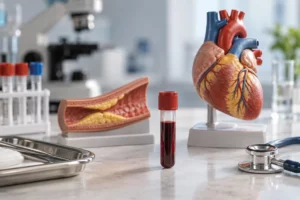
This silent progression is why waiting for symptoms is not a safe cholesterol strategy. A blood test called a lipid panel is needed to measure total cholesterol, LDL, HDL, and triglycerides.
Results should be considered alongside other factors, including age, blood pressure, smoking, diabetes, family history, and previous cardiovascular disease. One cholesterol number does not tell the full story.
Factors That Can Make Artery Damage Worse
High LDL cholesterol becomes more concerning when it appears alongside other cardiovascular risk factors. Smoking, high blood pressure, diabetes, physical inactivity, and certain inherited conditions can all increase the likelihood of artery damage.
High blood pressure places additional stress on blood vessel walls. Smoking exposes the cardiovascular system to chemicals that can damage arteries and contribute to atherosclerosis.
Diabetes can also affect blood vessels and frequently occurs with other risk factors, such as high triglycerides, low HDL, or high blood pressure. These conditions do not simply exist in isolation; their effects can combine.
This explains why two people with the same LDL result may receive different medical recommendations. A person with diabetes, high blood pressure, and a previous heart attack may need a much more intensive treatment plan than a younger adult with no additional risk factors.
How to Protect the Heart and Blood Vessels
Managing high cholesterol usually involves improving the overall cardiovascular risk profile rather than chasing one perfect number.
A heart-supportive eating pattern commonly includes vegetables, fruits, beans, whole grains, nuts, fish, and sources of unsaturated fat. Replacing some foods high in saturated fat with healthier alternatives may help reduce LDL cholesterol.
Regular physical activity can support cholesterol management, blood pressure, blood sugar, circulation, and general heart fitness. Avoiding tobacco is also essential because smoking directly damages the heart and blood vessels.
Some people need cholesterol-lowering medication in addition to lifestyle changes. Treatment may be especially important for individuals with very high LDL, inherited cholesterol disorders, diabetes, or existing cardiovascular disease.
Atherosclerosis treatment can include heart-healthy habits, medicine, and, in advanced cases, medical procedures or surgery.
Never stop or adjust prescribed medication without speaking with a qualified healthcare professional. The safest plan is based on your complete medical history, laboratory results, and personal cardiovascular risk.
High cholesterol affects the heart and blood vessels by encouraging plaque to develop inside artery walls.
Over time, this buildup can narrow and stiffen the arteries, reduce blood flow, and increase the risk of angina, heart attack, stroke, and peripheral artery disease. The process is especially dangerous because it often develops without noticeable symptoms.
Feeling healthy does not necessarily mean your cholesterol levels are within a healthy range. Check when you last had a lipid panel and discuss the results with a healthcare professional.
Alongside appropriate medical care, practical habits such as eating more fiber-rich foods, staying active, avoiding tobacco, and managing blood pressure or diabetes can help protect your arteries and long-term heart health.