
Saturated fat has been blamed for high cholesterol for decades, yet the topic can still feel confusing. One headline says butter is harmful, another suggests it is perfectly fine, and food labels often make the entire subject seem more complicated than it needs to be.
So, what is the connection between saturated fat and cholesterol? Regularly eating a lot of saturated fat can raise LDL cholesterol in many people.
LDL carries cholesterol through the bloodstream, and persistently high levels can encourage plaque to develop inside artery walls. Over time, this may increase the risk of heart attack, stroke, and other cardiovascular problems.
This does not mean one slice of cheese will instantly damage your heart. Your overall eating pattern, genetics, medical conditions, activity level, and the foods replacing saturated fat all matter.
The goal is not to fear fat or eliminate every favorite meal. It is to understand which fats you eat most often and make practical swaps that support healthier cholesterol levels.
What Is Saturated Fat?
Saturated fat is a type of dietary fat. Its chemical structure helps explain why many foods containing large amounts of it are firm or solid at room temperature.
Common sources include butter, ghee, cream, full-fat cheese, fatty meat, poultry skin, sausages, ice cream, coconut oil, palm oil, and certain baked or fried foods. Saturated fat is therefore found in both animal products and some plant-based oils.
Most foods contain a mixture of saturated, monounsaturated, and polyunsaturated fats. The practical question is not whether a food contains any saturated fat, but whether this type of fat makes up a large part of your regular diet.
How Saturated Fat Can Raise LDL Cholesterol
LDL stands for low-density lipoprotein. These particles transport cholesterol from the liver to cells that use it to build membranes, produce hormones, and perform other essential functions.
The liver also removes LDL particles from the bloodstream through structures called LDL receptors. Diets high in saturated fat can affect LDL production and clearance, leaving more LDL cholesterol in circulation.
Research has found that reducing saturated fat can increase LDL-receptor activity, helping the body remove more LDL from the blood. However, the exact response varies depending on a person’s genetics, starting cholesterol level, and wider eating pattern.
Major health organizations consistently identify excessive saturated fat as a dietary factor that can raise LDL. The latest US dyslipidemia guideline also describes avoiding saturated fat as an important part of controlling LDL through diet.
Why Higher LDL Matters for the Arteries
Cholesterol is necessary, and LDL particles have a normal transportation job. The concern begins when too many cholesterol-carrying particles remain in the bloodstream for too long.
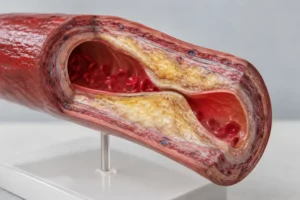
Some LDL particles can enter and become trapped in artery walls. They may undergo chemical changes, trigger inflammation, and contribute to the formation of atherosclerotic plaque.
Plaque can gradually narrow an artery and restrict the flow of oxygen-rich blood. It can also rupture, causing the body to form a blood clot that may suddenly block the artery.
A blockage in an artery supplying the heart may cause a heart attack, while one affecting the brain may cause an ischemic stroke. This process generally develops silently, so you cannot estimate your LDL level from how fit, healthy, or energetic you feel.
Saturated Fat Is Not Dietary Cholesterol
Saturated fat and dietary cholesterol are often found in the same foods, but they are not the same substance.
Dietary cholesterol is naturally present in animal-derived foods such as eggs, meat, seafood, and dairy products. Saturated fat is found in animal foods as well as plant sources such as coconut, palm, and palm kernel oils.
For many people, saturated fat has a more predictable effect on LDL cholesterol than dietary cholesterol alone. Foods high in dietary cholesterol may also contain substantial saturated fat, which is one reason the two nutrients are frequently confused.
The whole meal matters too. Eggs served with vegetables and whole-grain toast create a very different nutritional pattern from eggs served with bacon, buttered pastries, and fried potatoes.
Rather than judging one food solely by its cholesterol content, consider its saturated fat, fiber, sodium, level of processing, and place within your overall diet.
What You Replace Saturated Fat With Matters
Reducing saturated fat is most useful when it is replaced with unsaturated fats or fiber-rich carbohydrates. Simply removing butter and adding refined starch or sugar may not provide the same cardiovascular benefit.
Helpful replacements include olive, canola, soybean, and other non-tropical vegetable oils. Nuts, seeds, avocado, beans, lentils, and fish can also replace foods that are higher in saturated fat.
Whole grains, vegetables, and fruit are better carbohydrate replacements than products made mainly from refined flour and added sugar.
The World Health Organization recommends replacing saturated fat with polyunsaturated fat, plant-based monounsaturated fat, or carbohydrates from naturally fiber-rich foods.
For example, replacing butter on toast with avocado or nut butter improves the overall fat profile. Replacing fatty processed meat with beans or fish is generally more useful than replacing it with a highly refined snack.
This is why “eat less saturated fat” should not be interpreted as “eat anything labeled low-fat.” A low-fat biscuit packed with refined flour and added sugar is not automatically a better heart-health choice.
How Much Saturated Fat Should You Eat?
The World Health Organization recommends keeping saturated fat below 10% of total daily energy. On a 2,000-calorie eating plan, that equals approximately 22 grams of saturated fat per day.
The American Heart Association recommends a stricter target for a heart-healthy dietary pattern: less than 6% of total calories. For someone eating around 2,000 calories daily, that is approximately 13 grams or less.
These figures are general guidelines, not reasons to become anxious about every gram. People with high LDL, diabetes, established cardiovascular disease, or inherited cholesterol disorders may receive individualized dietary targets.
The Nutrition Facts label can help you compare products. Pay attention to both the saturated fat content and the listed serving size, especially when a package contains several servings but is commonly eaten all at once.
Simple Ways to Reduce Saturated Fat
Start with foods you eat frequently instead of trying to rebuild your entire diet overnight. Regular, manageable substitutions are more likely to become lasting habits.
Use olive or canola oil more often than butter, lard, or coconut oil. Choose leaner cuts of meat, remove visible fat and poultry skin, and make beans or lentils the main protein in some meals.
Herbs, spices, garlic, citrus, vinegar, and chili can provide plenty of flavor without relying heavily on cream, butter, or cheese. Lower-fat dairy products may also reduce saturated fat while allowing you to keep familiar meals on the menu.
For snacks, choose fruit, plain yogurt, hummus, or a small portion of unsalted nuts more often than pastries, ice cream, or processed meat. The NHLBI also recommends adding soluble fiber from foods such as oats, beans, and fruit to support lower LDL cholesterol.
Coconut oil deserves special attention because its “natural” image can be misleading. It contains a large amount of saturated fat and can raise LDL, so liquid unsaturated oils are generally more suitable for everyday heart-conscious cooking.
Remember that diet is only one influence on cholesterol. Genetics, age, diabetes, thyroid disease, kidney disease, smoking, physical activity, and certain medicines can also affect your lipid profile.
Some people may still need cholesterol-lowering medication despite following a nutritious diet.
The connection between saturated fat and cholesterol is fairly clear: eating too much saturated fat can raise LDL cholesterol, and long-term exposure to high LDL can contribute to plaque buildup inside the arteries.
The response varies between individuals, but it is important enough to shape major heart-health recommendations. The goal is not to eliminate all fat.
Replace some butter, fatty meat, tropical oil, and heavily processed foods with unsaturated oils, nuts, seeds, fish, beans, whole grains, fruit, and vegetables.
Check your lipid panel rather than guessing from symptoms or appearance. Discuss your results and a realistic saturated-fat target with a qualified healthcare professional, especially if you already have high LDL or other cardiovascular risk factors.