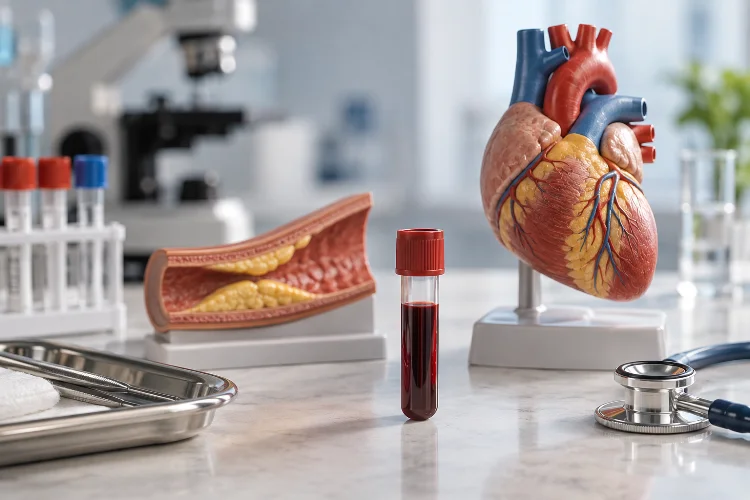

A cholesterol test may sound like something only older adults or people with heart problems need. In reality, cholesterol levels can begin changing much earlier in life, and high cholesterol often develops without causing any obvious symptoms.
You may feel energetic, exercise regularly, and have no chest pain while still carrying more LDL cholesterol than is healthy for your blood vessels.
The only reliable way to discover this is through a blood test. According to the CDC, high cholesterol usually has no symptoms, which is why many people do not know their levels are elevated.
So, what is a cholesterol test and why is it important? A cholesterol test, also called a lipid panel or lipid profile, measures different fats and cholesterol-carrying particles in your blood.
The results help healthcare professionals estimate your risk of heart disease and stroke, monitor changes over time, and decide whether lifestyle improvements or medication may be necessary.
Here is what beginners should know before getting tested.
What Is a Cholesterol Test?
A cholesterol test is a blood test that measures several types of lipids circulating in your bloodstream. Lipids are fat-like substances that your body uses for energy, cell production, hormone creation, and other essential functions.
The test is commonly called a lipid panel, lipid profile, or cholesterol screening. During the procedure, a healthcare professional usually takes a small blood sample from a vein in your arm. The process normally takes only a few minutes and may cause a brief sting or minor bruising.
Some pharmacies, clinics, and health programs also offer finger-prick tests. At-home cholesterol kits are available as well, although unusual or concerning results should still be discussed with a qualified medical professional.
A cholesterol test is not designed to diagnose every heart problem. Instead, it provides useful information about one important part of your overall cardiovascular risk.
What Does a Lipid Panel Measure?
A standard lipid panel usually reports total cholesterol, LDL cholesterol, HDL cholesterol, and triglycerides. Each result offers a different piece of information.
1. Total Cholesterol
Total cholesterol represents the overall amount of cholesterol measured in your blood. It includes cholesterol carried by LDL, HDL, and other lipoprotein particles.
Although this number can provide a quick overview, it should not be interpreted alone. Two people with the same total cholesterol result may have very different LDL, HDL, and triglyceride levels.
2. LDL Cholesterol
Low-density lipoprotein, commonly called LDL or “bad” cholesterol, transports cholesterol through the bloodstream. When LDL levels remain high, cholesterol can accumulate inside artery walls and contribute to plaque formation.
This buildup can gradually narrow the arteries, a process known as atherosclerosis. It may eventually increase the risk of heart disease, heart attack, stroke, and peripheral artery disease.
3. HDL Cholesterol
High-density lipoprotein, or HDL, is often known as “good” cholesterol. It helps transport cholesterol away from the arteries and back to the liver for processing.
Higher HDL levels are often associated with lower cardiovascular risk. However, HDL should not be viewed as a protective shield that automatically cancels out high LDL, smoking, diabetes, or high blood pressure.
4. Triglycerides
Triglycerides are another type of fat found in the blood. The body uses them to store extra energy from food.
High triglyceride levels can be especially concerning when they occur alongside high LDL or low HDL. A triglyceride level below 150 mg/dL is generally considered within the normal range for adults, although individual interpretation may vary.
Why Is a Cholesterol Test Important?
The biggest reason to get tested is simple: you usually cannot feel high cholesterol.
Unlike an infection that may cause fever or pain, elevated cholesterol can remain unnoticed for years. During that time, fatty deposits may slowly develop inside the arteries.
A cholesterol screening can identify a potential problem before it leads to serious complications.
If abnormal levels are found early, you may have time to improve your eating pattern, become more active, stop smoking, manage related health conditions, or begin medication when appropriate.
The results also help healthcare professionals estimate your broader cardiovascular risk. They may review your cholesterol numbers together with your age, blood pressure, family history, diabetes status, smoking habits, and previous medical conditions.
A single result does not predict exactly what will happen to you. It works more like a warning light, showing whether further attention or action may be useful.
How Is a Cholesterol Test Performed?
Most cholesterol tests involve a standard blood draw. A healthcare professional cleans an area of your arm, inserts a small needle into a vein, and collects blood in a tube.
The sample is then sent to a laboratory for analysis. Results may be available within a few days, although timing depends on the clinic and laboratory.
The risks are minimal. Some people experience mild discomfort, bruising, or tenderness where the needle entered, but these effects usually disappear quickly.
Finger-prick screenings can provide faster results and may be useful for basic checks. However, a full laboratory lipid panel may provide more complete information, especially when a healthcare professional is evaluating treatment or monitoring an existing condition.
Do You Need to Fast Before a Cholesterol Test?
Not every cholesterol test requires fasting. Both fasting and non-fasting lipid panels are used, depending on the reason for testing and the healthcare professional’s preference.
When fasting is required, you may be asked not to eat or drink anything except water for approximately 8 to 12 hours. Tests are often scheduled in the morning so most of the fasting period happens overnight.
Eating shortly before a test may have a noticeable effect on triglyceride levels. However, a non-fasting test can still provide useful information in many routine situations.
Do not assume that fasting is necessary. Ask the clinic or healthcare provider for specific instructions. You should also mention any medicines, supplements, recent illness, or pregnancy because these factors may sometimes affect the interpretation of laboratory results.
What Do Cholesterol Test Results Mean?
In the United States, cholesterol results are generally reported in milligrams per deciliter, written as mg/dL. Other countries may use millimoles per liter, or mmol/L.
For adults, commonly used general reference points include:
- Total cholesterol below 200 mg/dL
- LDL cholesterol below 100 mg/dL
- Non-HDL cholesterol below 130 mg/dL
- Triglycerides below 150 mg/dL
An HDL level of 60 mg/dL or higher is often viewed favorably. HDL below 40 mg/dL is generally considered low for adult men, while the reference range for women may differ.
These numbers should not be treated as universal treatment targets. Someone who has already experienced a heart attack or stroke may be given a much lower LDL goal than someone with no major cardiovascular risk factors.
For example, an LDL level below 100 mg/dL may be appropriate for some adults, while people at very high risk may receive targets below 70 or even 55 mg/dL. The right target depends on overall health, medical history, age, diabetes status, and other factors.
How Often Should You Get Tested?
Testing frequency depends on your age and personal risk profile. The CDC states that most healthy adults should have their cholesterol checked every four to six years. People with heart disease, diabetes, or a family history of high cholesterol may need more frequent testing.
The American Heart Association notes that screening about every five years from age 19 may work for many adults, although the schedule should be personalized.
Cholesterol screening can also begin during childhood. General guidance recommends at least one check between ages 9 and 11, followed by another during late adolescence or early adulthood.
Children with obesity, diabetes, or a strong family history may need earlier or more frequent screening.
More regular tests may also be recommended if you are taking cholesterol-lowering medication. Repeat testing allows your healthcare team to see whether treatment is working and whether adjustments are needed.
What Happens After the Test?
If your results fall outside the expected range, do not panic. An abnormal cholesterol result does not automatically mean you have heart disease or will experience a heart attack.
Your healthcare professional will consider the complete picture. The next steps may include repeating the test, reviewing your diet and activity levels, checking blood pressure or blood sugar, investigating family history, or calculating your estimated cardiovascular risk.
Lifestyle recommendations may include eating more vegetables, fruits, whole grains, beans, nuts, fish, and fiber-rich foods. Reducing saturated fat, avoiding tobacco, maintaining regular physical activity, and managing body weight may also improve a lipid profile.
Some people need cholesterol-lowering medicine in addition to lifestyle changes. This is more likely when LDL is extremely high, cardiovascular disease is already present, or conditions such as diabetes significantly increase risk.
Advanced tests may occasionally be considered. These can include apolipoprotein B, or apoB, and lipoprotein(a), known as Lp(a), when additional information about inherited or particle-related risk would be useful.
A cholesterol test is a quick blood test that provides valuable information about your LDL, HDL, triglycerides, and total cholesterol. It matters because high cholesterol rarely causes symptoms, yet it can contribute to plaque buildup, heart disease, and stroke over time.
Your numbers are not a final judgment on your health. They are practical tools that help you and your healthcare provider identify risk, monitor progress, and choose appropriate next steps.
Check when you last had a lipid panel, especially if you have diabetes, high blood pressure, a smoking history, or relatives with early heart disease. Schedule a screening when needed and review the results with a qualified healthcare professional rather than interpreting one number in isolation.