
Insulin resistance is usually discussed as a blood sugar problem. However, insulin does much more than help glucose enter cells. It also helps regulate how the body stores, releases, transports, and uses fat.
When muscle, liver, and fat cells stop responding normally to insulin, the effects can appear on a cholesterol test before type 2 diabetes is diagnosed.
Triglyceride levels often rise, while HDL-the type commonly called “good” cholesterol-may fall. This combination is a classic feature of metabolic syndrome and insulin-related dyslipidemia.
Understanding how insulin resistance affects triglycerides and HDL can make a confusing laboratory report easier to interpret. The changes are not caused by one unhealthy meal or a simple lack of discipline.
They develop through several connected metabolic processes involving fat tissue, the liver, enzymes, and cholesterol-carrying particles.
The good news is that insulin sensitivity and blood lipid levels can often improve through sustainable lifestyle changes and appropriate medical treatment.
What Is Insulin Resistance?
Insulin is a hormone produced by the pancreas. After you eat, it helps glucose move from the bloodstream into muscle, fat, and other cells, where the glucose can be used or stored.
Insulin resistance occurs when these cells do not respond to the hormone as effectively as they should. The pancreas may initially compensate by producing more insulin, but blood glucose can eventually rise and progress to prediabetes or type 2 diabetes.
This condition can also affect fat metabolism. Insulin normally helps control the release of stored fat from fat cells. When that control becomes weaker, more fatty acids can enter the bloodstream and travel to the liver.
Insulin resistance commonly has no obvious symptoms. A person may therefore have abnormal triglycerides, low HDL, high blood pressure, or elevated glucose without feeling noticeably unwell.
Why Insulin Resistance Raises Triglycerides
Triglycerides are the body’s main form of stored fat. They circulate in the blood inside particles such as very-low-density lipoproteins, or VLDL, and are used as an energy source when needed.
1. More Fatty Acids Reach the Liver
Under normal conditions, insulin helps limit the breakdown of stored fat between meals. With insulin resistance, fat tissue may release more free fatty acids into the bloodstream.
The liver receives this increased supply and uses much of it to create triglycerides. It then packages those triglycerides into VLDL particles and releases them back into circulation.
You can think of the liver as a distribution center. When too much raw material arrives, it produces and ships more triglyceride-rich packages than the bloodstream can efficiently handle.
2. Triglyceride-Rich Particles Are Cleared More Slowly
Insulin normally supports the activity of lipoprotein lipase, an enzyme that helps break down triglycerides carried in VLDL and other particles. Reduced insulin activity can lower the effectiveness of this system.
Insulin resistance may also increase proteins that interfere with triglyceride clearance, including apolipoprotein C-III. The result is a double problem: the liver produces more triglyceride-rich particles, while the body removes them more slowly.
This helps explain why high triglycerides are so common in people with insulin resistance, metabolic syndrome, prediabetes, and type 2 diabetes.
Why HDL Cholesterol Often Falls
HDL particles help move excess cholesterol away from tissues and toward the liver. Higher HDL levels are generally associated with lower cardiovascular risk, although HDL should not be interpreted or treated as an isolated target.
The fall in HDL during insulin resistance is closely connected to the increase in triglyceride-rich VLDL particles.
A transfer protein called CETP exchanges materials between lipoproteins. When the bloodstream contains more VLDL, CETP transfers more triglycerides into HDL while moving cholesterol out of it.
The triglyceride-enriched HDL particle is then processed by liver enzymes and becomes smaller. Its main structural protein, apolipoprotein A-I, can separate more easily, and the smaller particles are removed from circulation faster. The final result is a lower HDL cholesterol measurement.
In simple terms, insulin resistance does not merely reduce HDL production. It changes HDL particles in a way that makes them easier for the body to break down and clear.
The Typical Lipid Pattern of Insulin Resistance
The combination of high triglycerides and low HDL is often called atherogenic dyslipidemia. When it occurs in someone with diabetes, it may also be called diabetic dyslipidemia.
Another common feature is an increased number of small, dense LDL particles. A person’s standard LDL cholesterol result may be normal or only mildly elevated, yet the LDL particles may still have become smaller and potentially more harmful.
This happens because triglycerides are also transferred into LDL particles. After enzymes remove those triglycerides, smaller and denser LDL particles remain.
The typical pattern can therefore include:
- Elevated triglycerides and VLDL
- Low HDL cholesterol
- More small, dense LDL particles
- Higher non-HDL cholesterol or apolipoprotein B
This pattern can begin before blood glucose is high enough for a diabetes diagnosis. The American Heart Association notes that insulin resistance is linked to unhealthy cholesterol levels and blood vessel disease even before type 2 diabetes develops.
Why High Triglycerides and Low HDL Matter
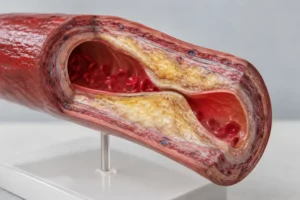
High triglycerides combined with low HDL or high LDL are associated with a greater risk of fatty deposits developing inside blood vessel walls. These deposits can contribute to atherosclerosis, heart attack, stroke, and peripheral artery disease.
However, HDL is not a simple “the higher, the better” treatment target. Raising the HDL number with a drug does not necessarily provide the same protection as improving the underlying metabolic problem.
Healthcare professionals generally evaluate the entire risk picture. This may include LDL, non-HDL cholesterol, triglycerides, blood pressure, glucose, A1C, smoking status, kidney function, family history, and existing cardiovascular disease.
Triglycerides below 150 mg/dL are generally considered within the normal range for adults, but results should still be interpreted alongside other risks. HDL is also considered as part of the overall assessment rather than used alone to guide treatment.
How Is Insulin Resistance Identified?
There is no single routine test that directly diagnoses insulin resistance in most clinical settings. Direct measurements are used mainly in research.
Healthcare professionals instead look for related findings. These may include elevated fasting glucose, an abnormal A1C result, high triglycerides, low HDL, increased waist size, high blood pressure, fatty liver disease, or signs such as acanthosis nigricans.
A standard lipid panel measures total cholesterol, LDL, HDL, and triglycerides. Glucose and A1C tests can help identify prediabetes or diabetes, while liver and thyroid tests may be used to investigate other causes of abnormal blood fats.
One unusual result may need to be repeated. Recent illness, alcohol consumption, certain medications, uncontrolled diabetes, and whether the person fasted can all influence triglyceride measurements.
Can Improving Insulin Sensitivity Improve Triglycerides and HDL?
Yes, although the amount of improvement varies between individuals. When insulin activity improves, fat cells may release fewer fatty acids, the liver may produce less VLDL, and triglyceride-rich particles may be cleared more efficiently.
Better blood glucose control can markedly reduce triglycerides when diabetes has been poorly controlled. It may also produce a modest increase in HDL.
Regular physical activity is especially useful because working muscles can take up glucose more effectively. Adults are generally advised to aim for at least 150 minutes of moderate-intensity aerobic activity each week, along with muscle-strengthening activity on at least two days.
Food choices matter too. Reducing sugary drinks, refined carbohydrates, excessive alcohol, and frequent sources of saturated fat may help. Meals based on vegetables, beans, whole grains, nuts, fish, lean proteins, and unsaturated fats can support healthier glucose and lipid levels.
When weight loss is medically appropriate, modest and sustainable progress can improve insulin sensitivity and cardiovascular risk. The focus should remain on repeatable habits rather than extreme diets.
When Medication May Be Needed
Lifestyle changes are the foundation of managing insulin resistance, but they are not always sufficient. Treatment may also include medicine for blood glucose, LDL cholesterol, triglycerides, blood pressure, or another related condition.
Statins are frequently recommended when cardiovascular risk or LDL-related risk is elevated. Their main purpose is to reduce harmful cholesterol particles and lower the likelihood of heart attack or stroke—not to raise HDL directly.
Very high triglycerides may require additional treatment because they can increase the risk of pancreatitis. The appropriate medicine depends on the triglyceride level, diabetes control, cardiovascular history, kidney function, and other factors.
Do not use over-the-counter supplements as replacements for prescribed treatment without medical advice. Some supplements can interact with medicines, contain inconsistent doses, or fail to address the main cardiovascular risk.
Insulin resistance affects triglycerides and HDL by disrupting the body’s normal handling of fat. More fatty acids reach the liver, VLDL production increases, and triglyceride-rich particles remain in the blood longer.
These changes also transform HDL into smaller particles that are cleared more quickly, causing HDL levels to fall. The resulting pattern-high triglycerides, low HDL, and often small, dense LDL-is an important warning sign of metabolic and cardiovascular risk.
Review your lipid panel together with your glucose, A1C, blood pressure, and family history. Speak with a qualified healthcare professional about realistic nutrition, activity, weight, and treatment goals.
Improving insulin sensitivity can benefit far more than blood sugar; it can also support healthier blood fats and long-term heart health.